

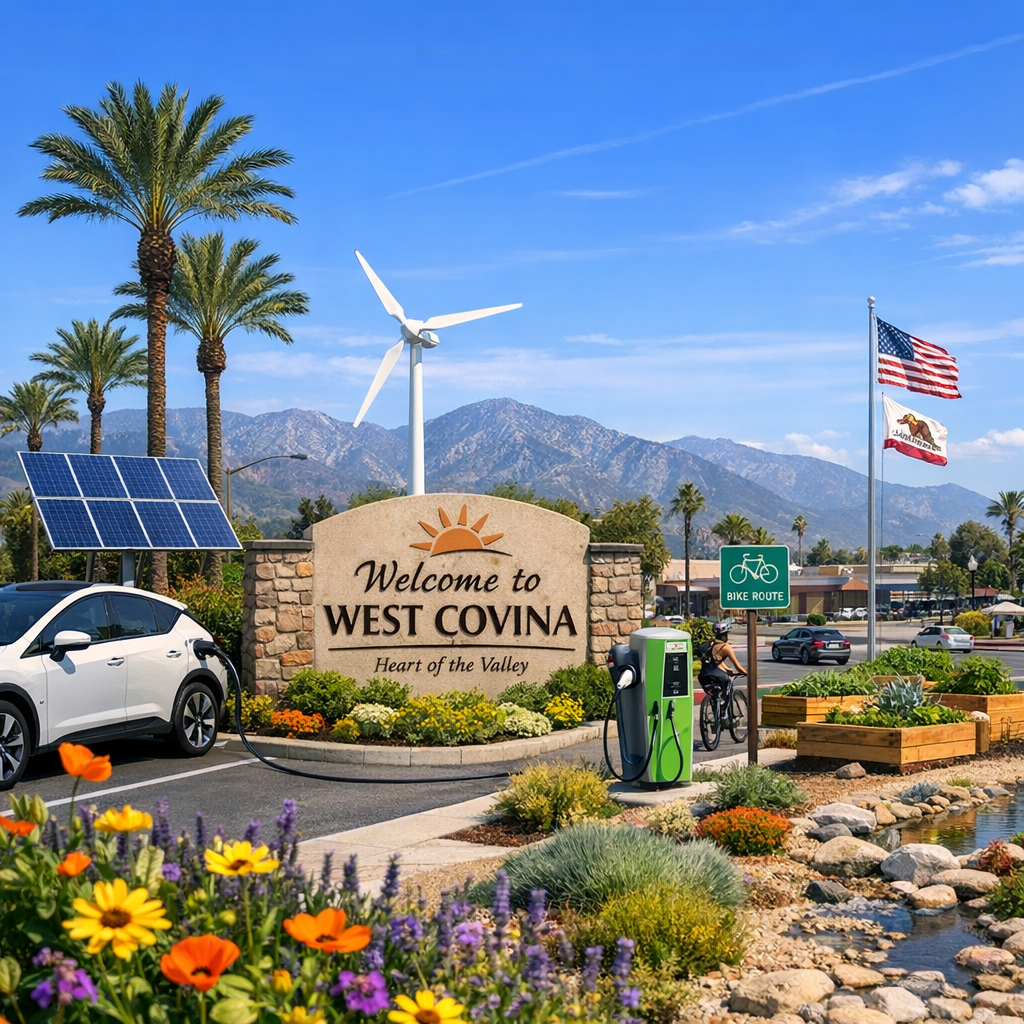
West Covina, nestled in the heart of Southern California, experiences a Mediterranean climate characterized by mild, wet winters and hot, dry summers. Average temperatures range from lows of 48.4°F (9.1°C) in January to highs of 88.9°F (31.6°C) in July. Rainfall is minimal during summer months, with June averaging just 0.04 inches (1mm), while December sees the highest average rainfall at 1.73 inches (44mm).
Given these climatic conditions, the city faces environmental challenges such as drought, heatwaves, and potential flooding. To address these issues, West Covina has implemented several initiatives:
Environmental Services Programs
The city’s Environmental Services department promotes waste reduction, reuse, and recycling through various programs, including:
- Earth Day/Arbor Day celebrations
- America Recycles Day events
- Beverage container recycling and litter reduction campaigns
- Bi-monthly electronic waste collections
- Annual household hazardous waste roundups
These efforts aim to minimize waste and encourage sustainable practices among residents and businesses.
Stormwater Pollution Prevention
Urban runoff, especially during rainstorms, can carry pollutants into local waterways. To combat this, West Covina has established a Stormwater Pollution Prevention program that includes:
- Public education on preventing pollution
- Regular street sweeping and storm drain cleaning
- Installation of trash capture screens over storm drain inlets
- Enforcement of regulations to prevent illicit discharges
Residents are encouraged to report spills or illicit discharges to the Los Angeles County 24-Hour Water Pollution Reporting Hotline at 1-888-CLEAN-LA (888-253-2652).
Local Hazard Mitigation Plan
In May 2026, West Covina initiated an update to its Local Hazard Mitigation Plan (LHMP). This plan outlines strategies to reduce vulnerabilities to natural hazards such as wildfires, earthquakes, and droughts. Public participation is a key component of the planning process, with opportunities for community input announced throughout the development of the plan.
By understanding the local climate and actively participating in these environmental initiatives, residents can contribute to a more sustainable and resilient West Covina.